
|
Mission: G.R.I.T.! OPS is on a mission this year! Mission: GRIT! aims to increase the passion and perseverance of our students. Stay tuned for more information about what grit is, why we want it, and how to foster it. In the meantime, please feel free to look through my blog posts for information on a variety of topics. If you're looking for information about counseling resources in the OPS area, click here for emergency mental health hotlines, as well as a list of psychotherapy providers used by other OPS families. PLEASE NOTE: If you or a family member are experiencing the signs or symptoms of a mental illness and feel you are in crisis, call 201-262-HELP (4357) or dial 911.
|
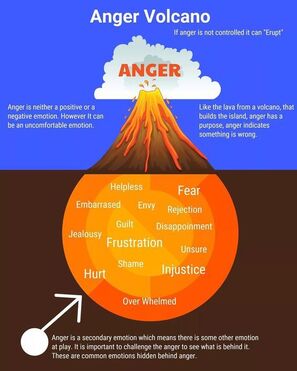 In our Open Circle lessons this month, children have been learning to recognize and name their feelings. Research shows that being able to name the feelings we have is an important first step to being able to cope with and regulate our feelings. However, the most common responses when someone is asked about their feelings are "happy," "sad," or "mad." I want to discuss that last one - "mad." There's a common misconception about being mad, or angry. Most people believe that anger is a direct result of something they've experienced: "Her comment made me mad," or "I'm so angry at myself for what I just did!" While anger is certainly real and serves an important purpose, it is considered by many (although controversially) to be a secondary emotion. Secondary emotions are feelings that come second. This means another feeling - or feelings - happened first (primary emotions). Primary emotions are a direct result of an experience and, therefore, tend to fade when the experience is over. Secondary emotions, on the other hand, develop after the primary emotion(s) and tend to persist long past the experience. They can also be disproportionately intense. Over time, we can get so accustomed to expressing anger instead of our primary emotion(s) that we don't even realize something else came first; the anger feels automatic. No matter your opinion on whether anger is primary or secondary (maybe it can be either depending on the circumstances?), it is often true that we say "angry" as a catch-all word for a lot of other feelings. Please take a look at the Anger Volcano graphic above. This picture is helpful with students because it shows metaphorically what they might be feeling inside. When a student says s/he is angry, I explain how anger comes second and ask her/him to try to identify which feeling is "underneath the mad." Think of a time when you were angry. Now look at the words in the "lava" section. Can you find one (or more) that more accurately represents what you were feeling? Why is this important? The ability to recognize and name a wide variety of emotions is called emotional granularity. It's important to be able to name what we're really feeling for 3 reasons: 1. Research shows taking the time to accurately name one's feelings actually helps decrease the intensity of the feeling ("Name it to tame it"). Apparently, naming employs the frontal lobe of the brain so we're not "flipping our lid" and only reacting from the emotion-centers of the brain (click here to watch a video about this.); 2. We can better address the problem and find an appropriate solution if we've accurately assessed the feeling; and 3. It is an important first step in accurately communicating our feelings to others, making those conversations more constructive and productive (rather than destructive). All too often, we say we are "mad" because admitting what we really feel would be too uncomfortable. This may be ESPECIALLY true when we've decided to say something to the person who "angered" us. We tell them how "mad" we are instead of talking about what's underneath; we use anger to mask our true feelings and avoid feeling vulnerable. (Or worse, we don't talk about it at all and just do something to "bounce" the primary emotion back to them.) When we speak from a place of anger, it almost always puts the other person on the defensive, thereby starting an argument and further damaging the relationship. If we can speak from the emotion that's "underneath the mad" (hurt/frustration/afraid/etc), the other person is more likely to actually hear us and a deeper understanding can be forged. Easier said than done, I know, but I invite you to try it. Next time you say you're mad or feel anger bubbling up inside you, take a moment to find the name of the feeling that's underneath it. I think you'll find doing this brings you a deeper understanding of the situation and yourself. Next, try talking about the true feeling instead of anger (try using "I Statements" to do this). It takes practice, but this approach has the potential to turn arguments into opportunities for understanding, resolution, and, most importantly, connection.
2 Comments
Samantha Addonizio
12/26/2019 10:05:03 am
Very helpful for our entire family yo understand why we “erupt””! Thank you!!! Printing and posting the volcano to remind all of us to name the primary emotion and deal with the cause of that.
Rima Mason
1/1/2020 10:00:36 pm
Thank you!! So glad you found this to be of help! Leave a Reply. |
